MATT MAUCH
  • home
  • / about
  • / books
  • / reviews, interviews
  • / contact
  • /A Northern Spring—book meets world

A   new   mural   in   belfast

4/28/2023

0 Comments

 
Picture
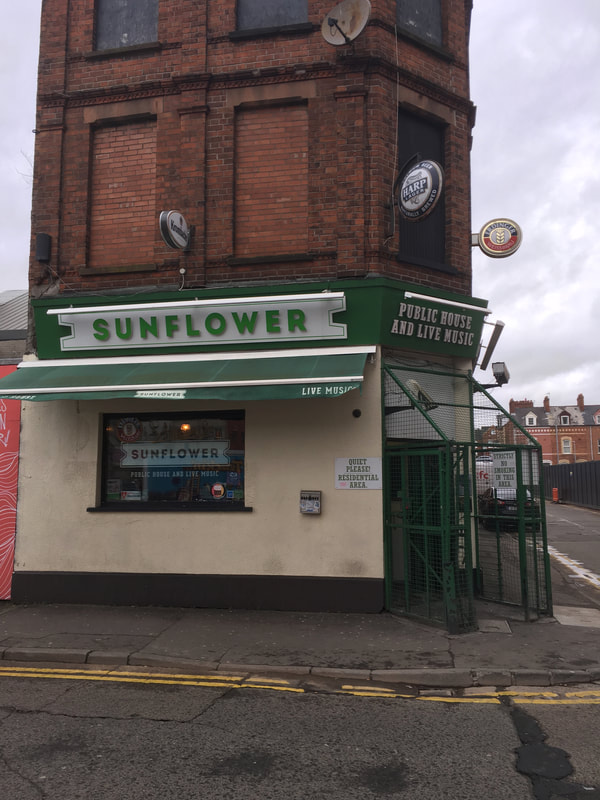
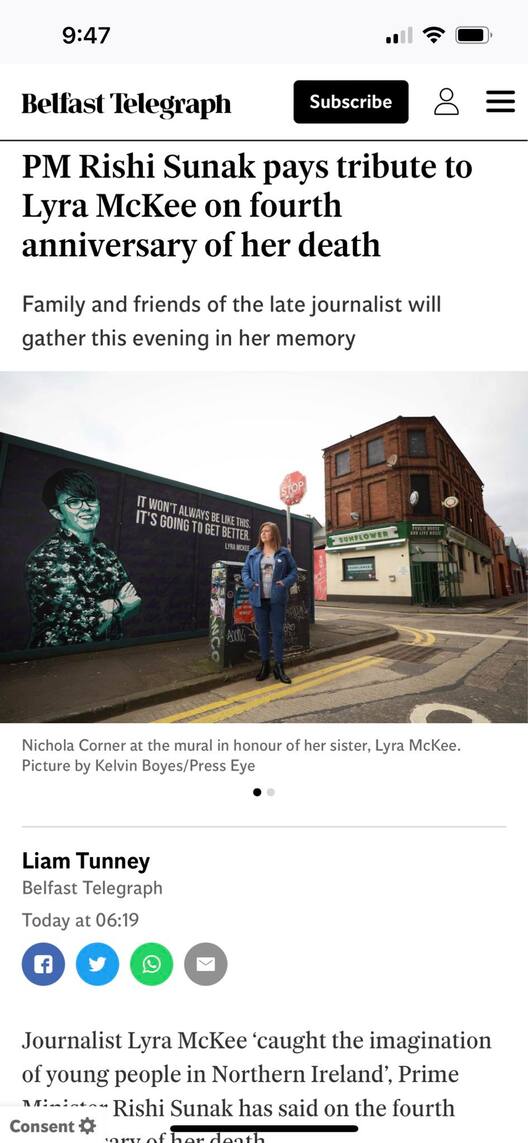
I saw this photo and story during my morning reading last week, and thought, “I know that stretch of road.” I write about it and the surrounding area in the second prose section of A Northern Spring. The flat we rented is just through this intersection, to the right—across the street from The Sunflower. This is the road I walked early every morning, before anybody else was up, to get coffee and pastries for the crew from a nearby Caffe Nero. I write about how it felt like I’d become a regular at both the Nero and The Sunflower, where we got on especially well with the guy running the pizza oven (a wood burner in the beer garden), who gave us recommendations for the next leg of our trip—to the Antrim Coast, Bushmills, and Derry—and made us bespoke pizzas with what ingredients were available (the brand-new and encroaching pandemic was already affecting supply chains).

I remember this stretch well: just behind a person holding a camera to take this shot, somebody had spray-painted, quite largely, the initials KAT, which I figured were the initials of somebody’s name. I started to see that this KAT character got around and was tagging up lots of places. Then one of our guides in Belfast, Damien, schooled us on sectarian graffiti. That KAT means “Kill All Taigs” and that “Taigs” is a derogatory term Protestants use for Catholics gave my morning walks a different tone.

On the street by the Nero is a makeshift and fading memorial, like the roadside memorials we see here where people have died in wrecks, commemorating two (maybe it was three) men killed there longish ago—during the Troubles—by an IRA bomb. A couple days later on a walking tour in Derry our guide Gleann would note that we were standing near where Lyra McKee had been murdered less than a year ago by a New IRA gunman in a flash of sectarian violence.

The public art in the North can be way-to-one-side moving or way-to-the-other-side menacing. A walk down this stretch of road would have a new and better tone and flavor with this mural there. The peace in the North is imperfect as hell, but it’s a grand imperfection. Here’s to it lasting, and spreading.

PHOTO: Screenshot from the Belfast Telegraph announcing a memorial mural for Lyra McKee.
0 Comments

What   will   they   think?

4/25/2023

0 Comments

 
Picture
Picture
Picture
Picture
Picture
Picture
Picture
Picture
Picture
Since brunch this past Sunday, I’ve been wondering, “Is this at all how Alexis De Tocqueville felt? Or, less famously, Dervla Murphy? Did they both think like I’m thinking—what will they think?”

Tocqueville wrote in Democracy In America for, at least in part, a French audience, and for sure (I’m reading it now) for a not-American audience. Murphy wrote (among many things she wrote) A Place Apart about Northern Ireland for audiences not in the North.

In A Northern Spring, a good three-quarters of the prose and a healthy dose of the poetry is me writing about the North of Ireland for an American audience. And at brunch this past Sunday I did a frightening thing: I got two advance copies of A Northern Spring into the hands of a couple of acquaintances from the North—Réamonn and Fergal—back in Minneapolis for more cultural exchange (I first met them about this time last year, culturally exchanging).

I didn’t read Murphy’s book till this spring—well after my book was finished—but what I do is akin to what she did. If she invented this genre, I’m following suit. Did she wonder about what those in the North would think? Did Tocqueville wonder about what we would think? I know I do—very much so. I want them (Réamonn, Fergal, the rest) to find my take candid, honest, useful, and as duly generous as I found them to be. And that I may inadvertently not be what I hope I’ve been? Tom Petty was right: “the waiting [to hear what they think] is the hardest part.”

SIDEBAR: Tocqueville was a student at The Fabert School in Metz, France, from 1817-1823, from the ages of 12-18. My great, great grandfather Matthew Lewis was born in Metz in 1825. The population at the time was about 42,000. I wonder if the young Tocqueville ever happened upon the infant Lewis?

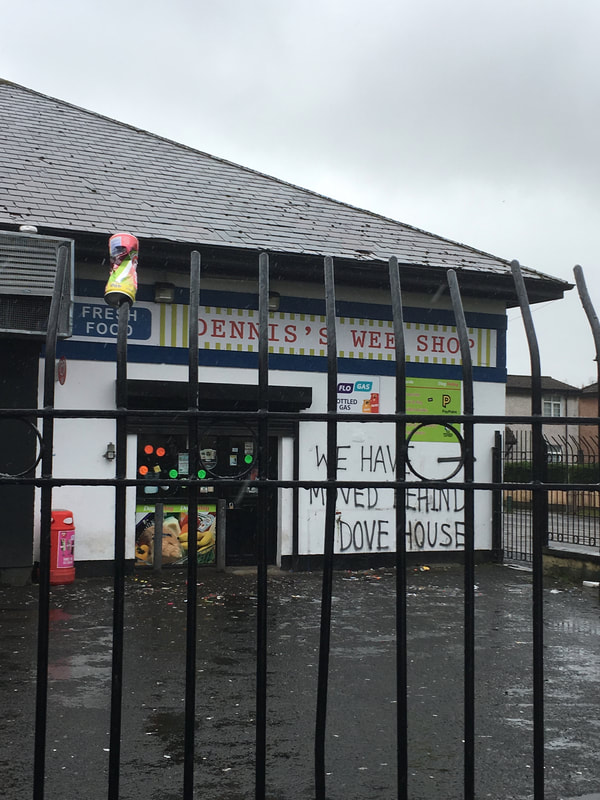
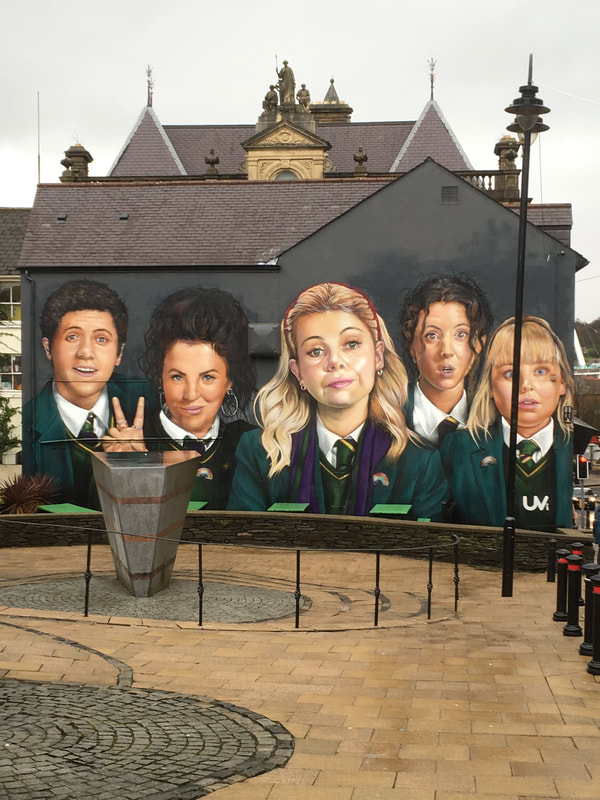
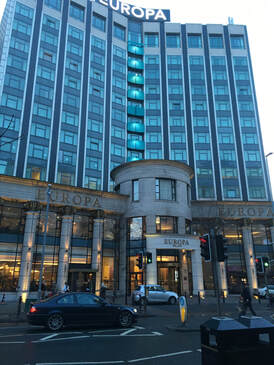
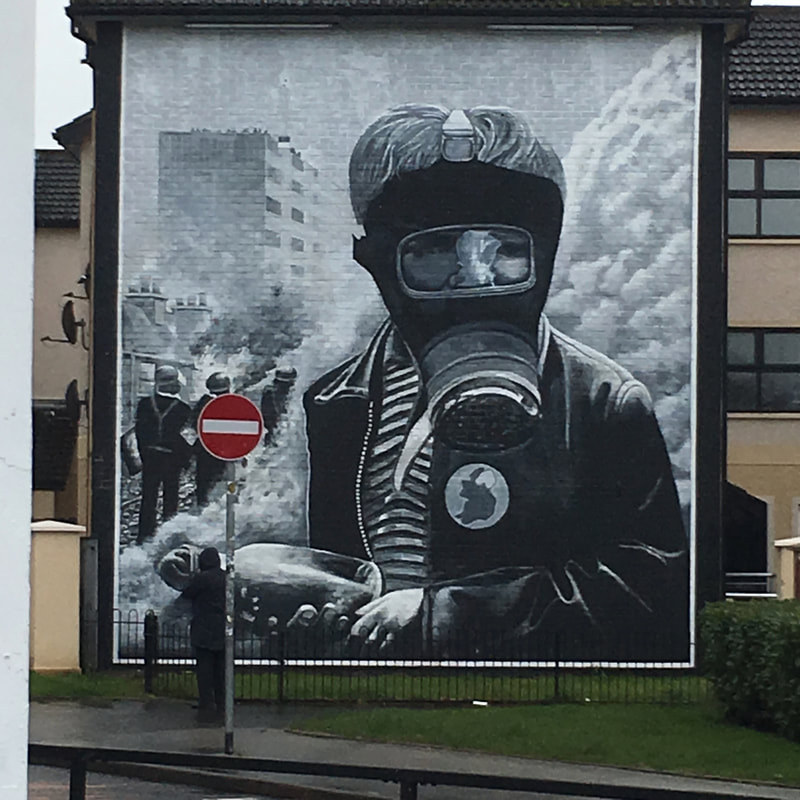
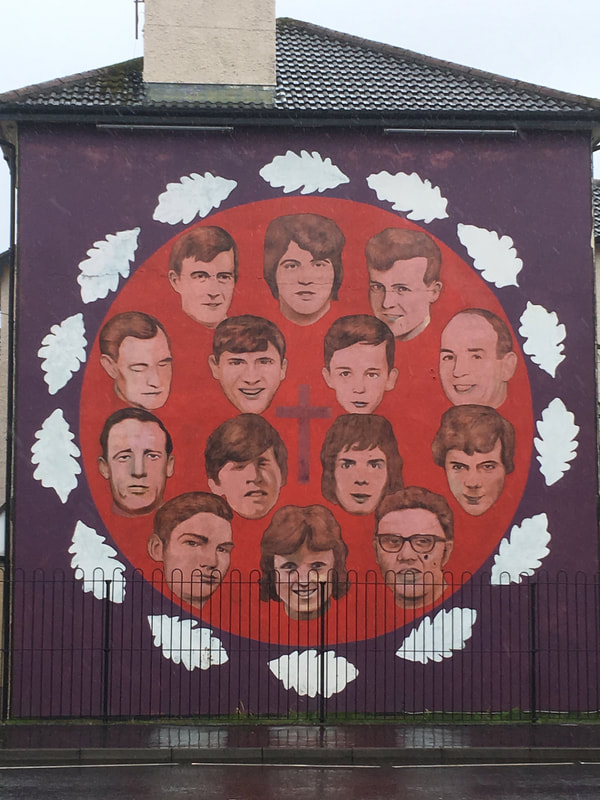
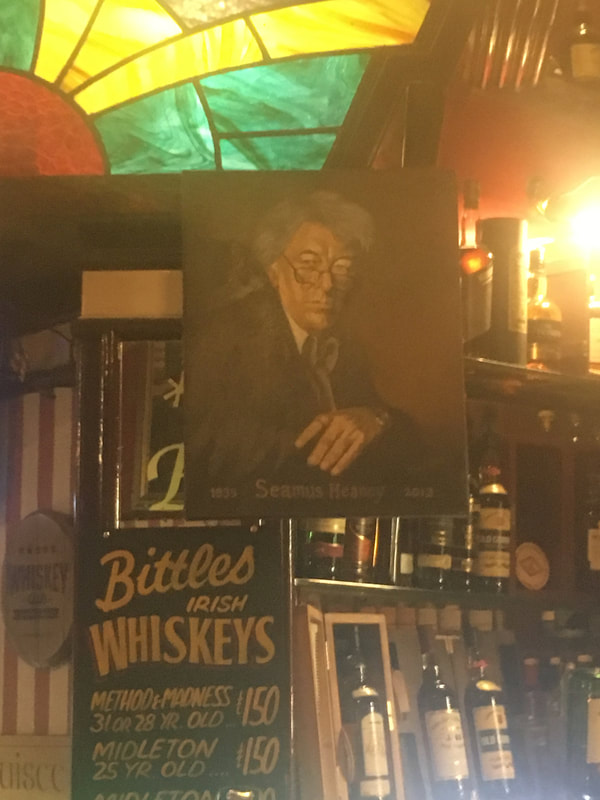
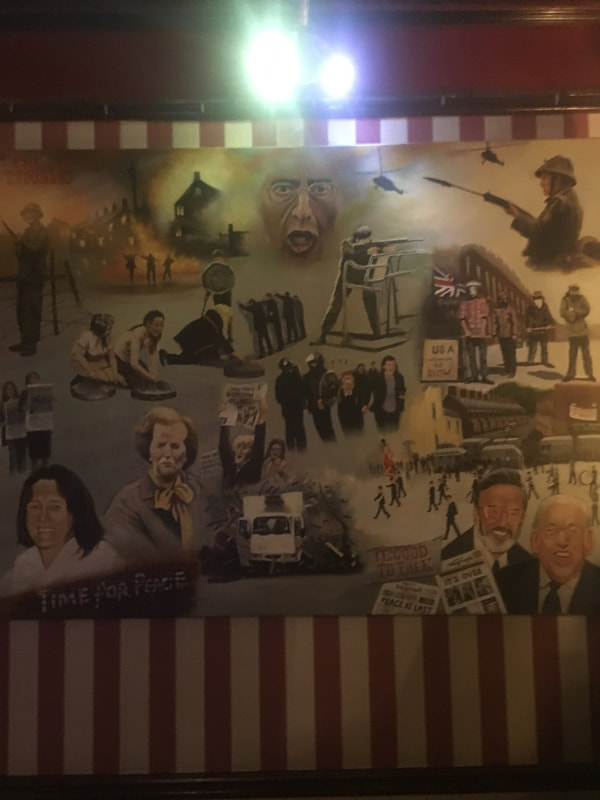
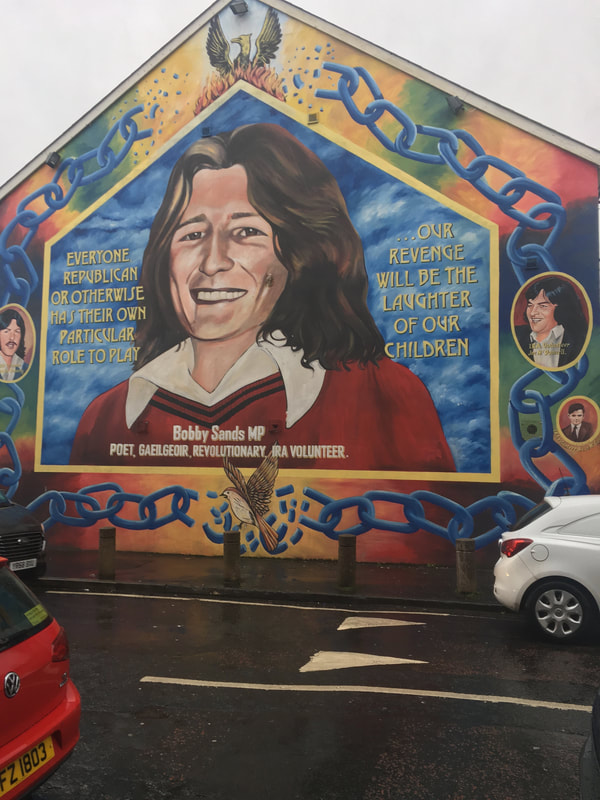
PHOTOS: Clockwise from upper left: Bobby Sands mural on the side of Sinn Fein office headquarters, Belfast; Europa Hotel, Belfast, known as "the most bombed hotel in the world" for the 36 bomb attacks there during the Troubles; a Troubles mural in the Bogside, Derry, site of the 1972 Bloody Sunday massacre;  another Bogside mural depicting the fourteen killed by British Parachute Regiment soldiers on Bloody Sunday
; painting of poet Seamus Heaney in Bittles Bar, Belfast; Troubles mural in Bittles; Derry Girls mural, Derry; Dennis's Wee Shop from Derry Girls, Bogside, Derry; "YOU ARE NOW ENTERING FREE DERRY" sign, Bogside.
0 Comments

A   NORTHERN  SPRING—THE   GIST (what  i  try  to  convey  in   readings)

4/22/2023

0 Comments

 
Picture
Picture
Picture
Picture
Picture
Remember the spring of 2020? The COVID spring? Well, in A Northern Spring I've captured a version of it in roughly 35,000 words: some prose, some poetry—so a hybrid capturing, a kind of memoir.

This version of that spring we'll never forget begins in Derry, in the North of Ireland, where, among other things, I was doing research on the Troubles for a study-abroad class I've created that uses the Troubles as a lens through which to better see and respond in art to the violences, fractures, and divisions in the US. While I was there, the then US president announced a vague travel ban for "everybody in Europe."

In four sections I call preludes spaced throughout the book, I write about being abroad and not being sure we'd be able to make it home as a pandemic was gripping the world, then not being sure we wanted to return to where the pandemic seemed a whole lot worse. The writing in these four sections is packaged in the form of text messages to an unnamed P from an unnamed MM that receive no replies—so text messages into a kind of void, based on the IRL fact that I didn't have an international travel plan for my phone so wasn't receiving any messages while abroad (they all came in at once when I landed back home). In between these preludes are poems about life at the start of the COVID pandemic, often in conversations with writing from pandemics of the past, or the one we got handed,  or just texts that in light of the new realities of a pandemic seemed to gain significance.

I am one of those for whom the pandemic was a productive period. I wrote the book in real time, completing it in the spring of 2020. The book's ending, a section called "Minneapolis: The Last Week of May 2020," found me. There I write about the murder of George Floyd in South Minneapolis, where I live, and all the all that began to transpire locally in the wake of that.

There is a kind of coming full circle where the local becomes global when a mural in Belfast and a vigil in Derry—the last two places I'd experienced "normal" life before the COVID lockdown—honor/commemorate/bring attention to the murder of Floyd by members of the MPD.

So, evacuation, lockdown, uprising: these 35,000 or so words, with a real and true narrative arc, are my capturing of a confluence of events and circumstances over roughly two and a half months that are both peculiar to me and not peculiar to me at all, but shared by many (is it too much to say "all of us"?).

I've dedicated the book to Minneapolis, a city I fell in love with and decided I wanted to live in roughly 30 years ago on a school trip to see a Shakespeare play at the old Guthrie Theater, a city I eventually made my way to—and my life in—about twenty years ago. I still love it here but the love, as you'd expect, is a lot more complex than when it began.

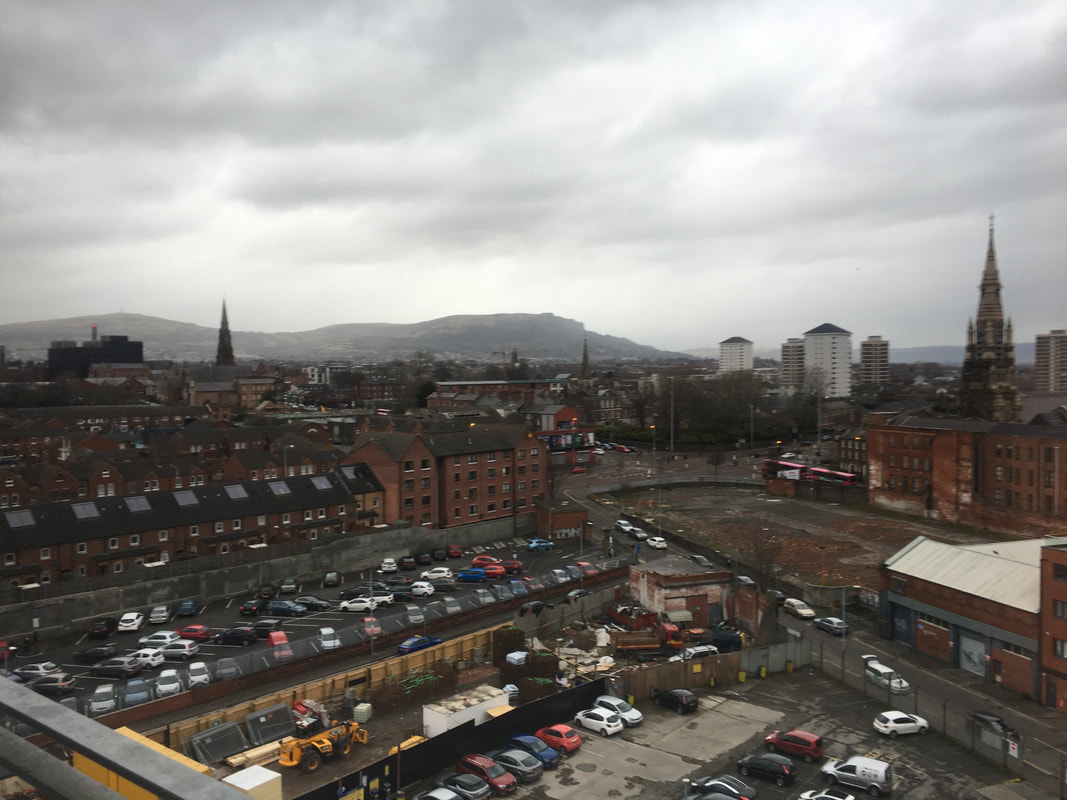
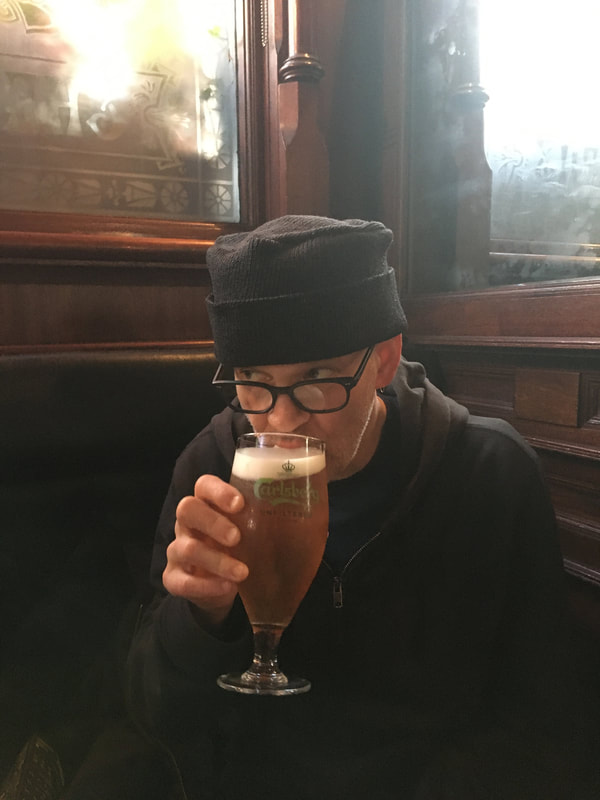
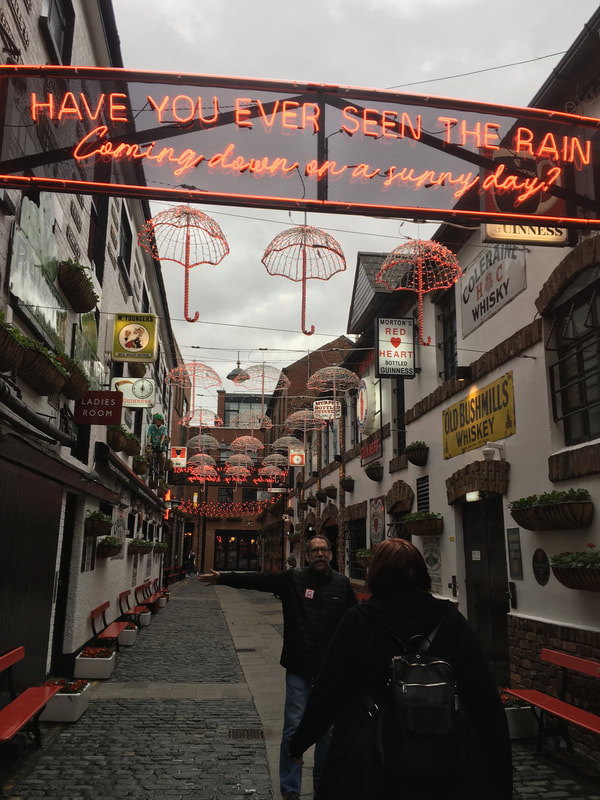
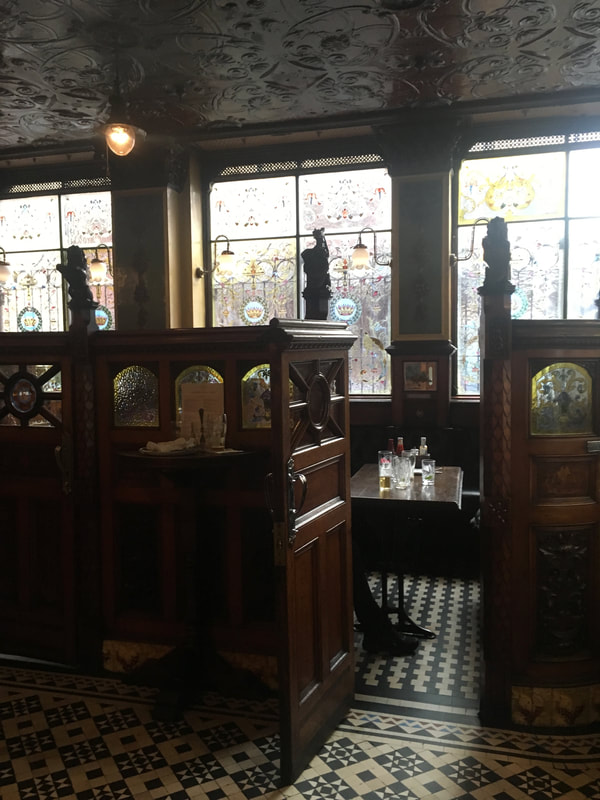
PHOTOS: Clockwise from upper left: The lovely Sunflower Pub, across the street from our rental during our first say in Belfast; the street on which we would eventually locate—after passing it several times and missing it—the sought-after Duke of York; a snug in The Crown Liquor Saloon, which may or may not be the one featured in Anthony Bourdain's trip to Belfast for season 3, episode1 of No Reservations; The Garrick Bar, our first stop in country after dropping our bags at the rental flat, featuring me hungry and waiting for food (the libations arrived first); the view of Belfast from a window in our rental. All photos taken before the declaration of COVID-19 as a global pandemic, and so are the last depictions of a prior and now forever gone normalcy.
0 Comments

Rosie    and   the   brookside   bar   &   Grill,   marine   on   st.  croix

4/21/2023

0 Comments

 
Picture


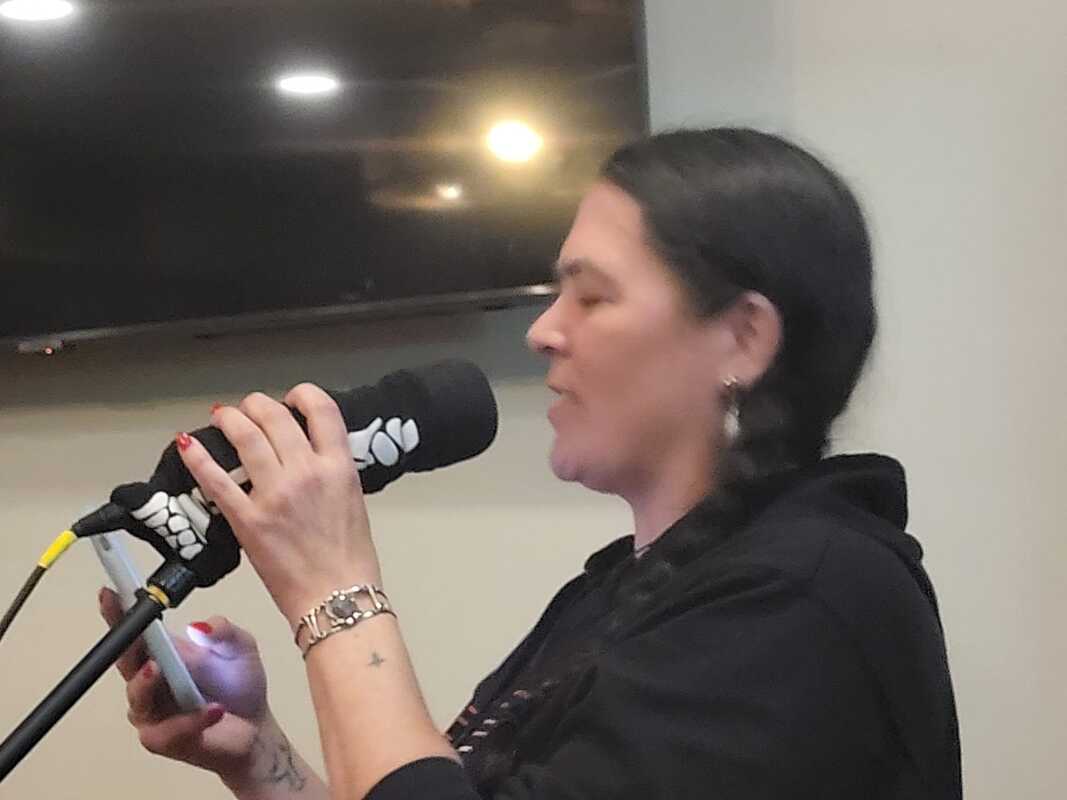
The small town bar and grill is a genre I know well. I may even be something of a connoisseur. So: Rosie Peters and company are running one of the best of the best in Brookside Bar & Grill. I was fortunate to be on the bill at Rosie’s inaugural reading event last night with Brian Baumgart, Scott E. Vetsch, and Lynette Reini-Grandell. Venus DeMars followed with a short musical set.

I've been to the Brookside before, which I thought was the case but then knew was the case once I pulled off the main road into Marine on St. Croix. My wife and I and a handful to a couple handfuls of friends used to camp every year a bit farther north, on the banks of the St. Croix. For years we camped on the Minnesota side and then switched to the Wisconsin side, where the group sites are in the remotest part of the campground (if you're going, these Wisconsin sites get my five-star rating). During the days, we'd drive around the area and hit up small-town bars and grills, the Brookside being one of many in the area, one of many we enjoyed. During a dry year on one of the those trips, when the river seemed low and slow—you could walk three-quarters of the way acroos starting from the Minnesota side on a sandbar with your head and shoulders above water—I and my brother decided we were good enough swimmers to get across the rest of it, where where the channel deepened. Long story short: It was a dumb idea. We almost drowned. Once we made it to the Wisconsin side, we just started walking toward the camps along whatever trails we could find. We hoped our camping party would get in a vehicle and come find us. Which they did. But we'd put in a lot of sore, barefoot mileage before they got to us.

I debuted my small town bar and grill reading set—light on the commentary, heavy on the shorter, punchier poems—which needs some tweaking. I read mostly from my reading copy of the book, the pages marked with colored tabs, the colors indicating sorts of poems I may or may not want to include, depending on how the audience is feeling. It can be hard to hear in bar readings with some people there just to eat or drink and not to listen to poetry. It can be hard to hear yourself and pay attention to what you're doing. All in all, it was typical in that regard, although a lot of people who seemed at the start to be there to drink and socialize it turns out were interested in the reading, but a little shy about it, this being the first time such a thing has occurred at Brookside.

Rosie is a great writer herself. She was a mentor for the Write Like Us program awhile back and visited my Into to Creative Writing class. She was on fire and the class loved her. It felt good to return the favor and to make the long drive that Rosie makes whenever she does events in the Twin Cities.

Rosie says the readings will be a monthly thing. Lots of live music on weekends, too. The Guinness and walleye fingers were perfect pub grub. Brookside in Marine on St. Croix: It’s worth a trip. It’s worth becoming a kind of regular. If you know Rosie at all, you know that the music and lit and Guinness come with lots of love, inclusivity, and generous and free helpings of hugs. See you there.

PHOTO: The inimitable Rosie Peters at the mic, launching the Brookside reading series.
0 Comments

poor   farm   studios   meets   the   poets  . . .  and   all  gathered   meet   the   pizzas

4/16/2023

0 Comments

 
Picture
Picture
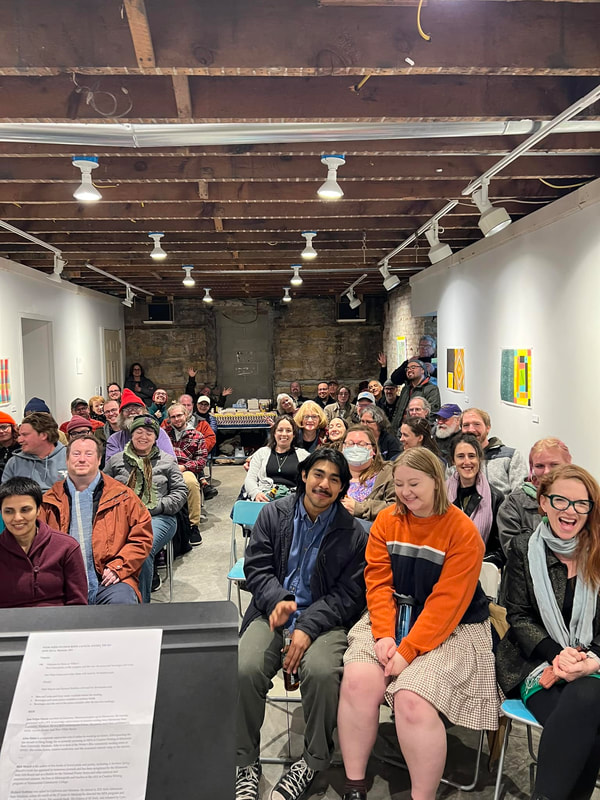
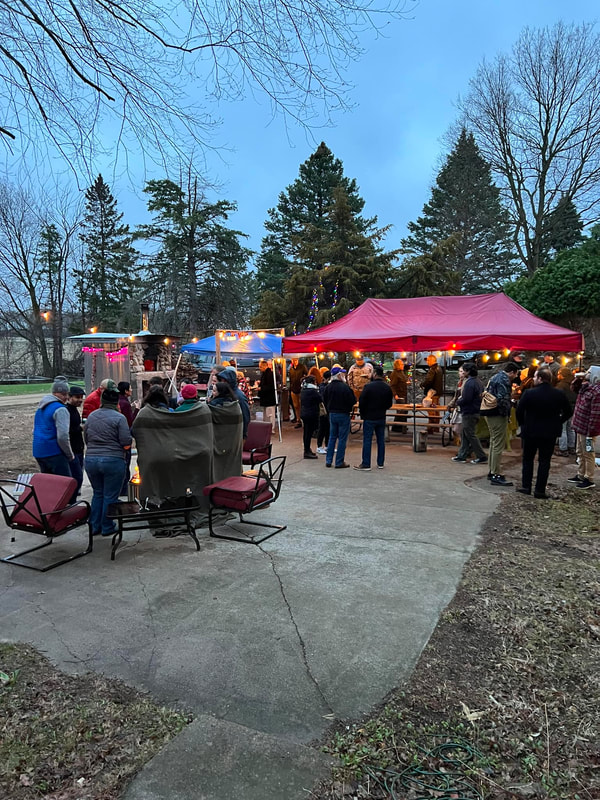
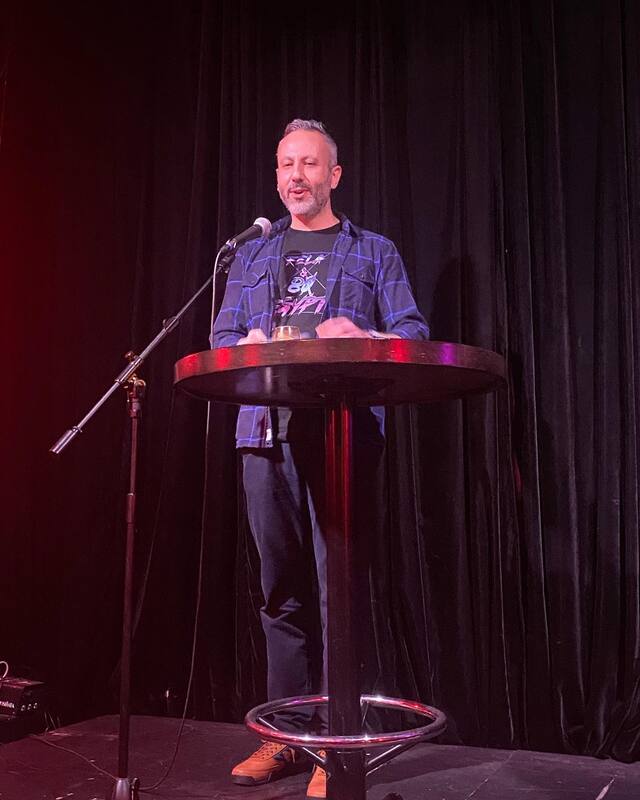
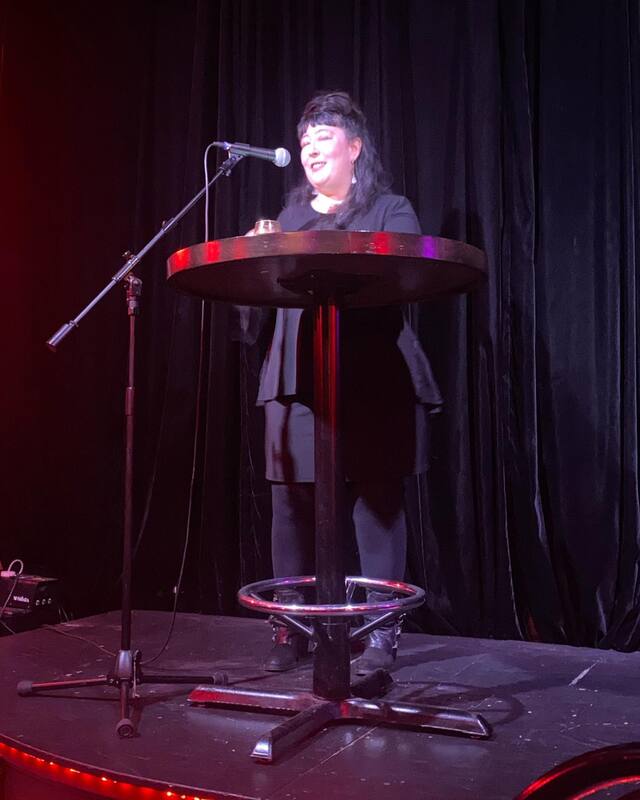
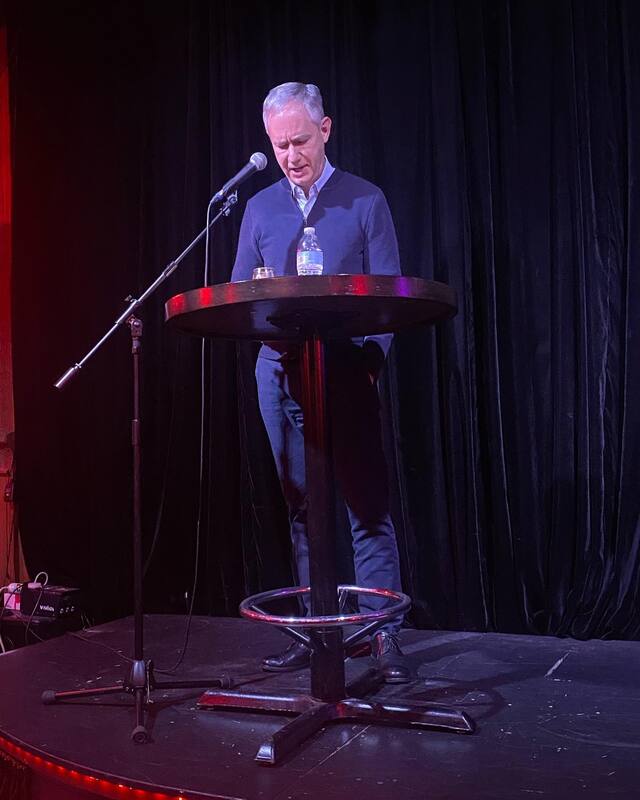
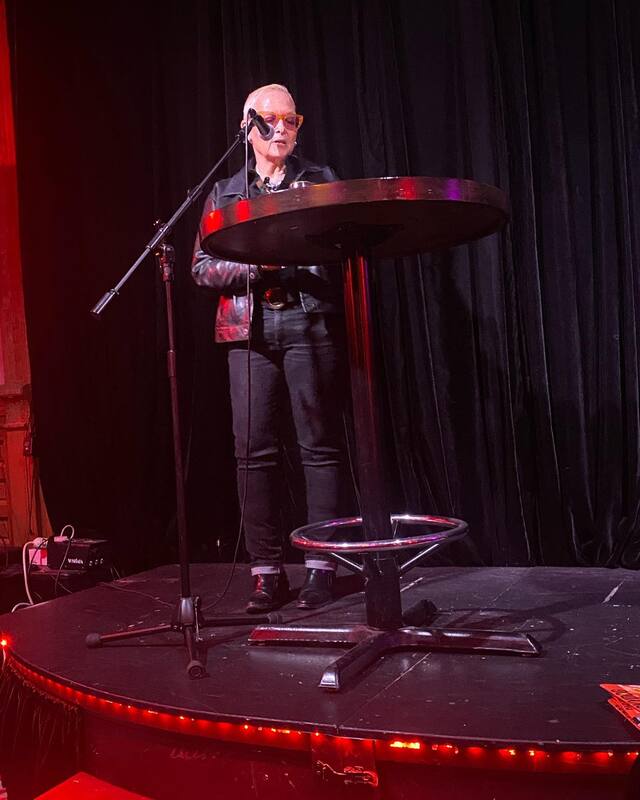
If I were HOF lefty Bert Blyleven, I’d circle Geoff Herbach, Candace Black, Nick Healy, Kevin Langton, Edward Micus, Tina Gross, Michael Torres, Nate Leboutillier, Angie Mauch, fellow readers Jose Felipe Ozuna, Ailee Slater, star of the show the eminent Richard Robbins, and Poor Farm Studios hosts Brian Frink and Wilbur Neushwander-Frink. They are all pictured in one or another of the photos here from our reading last night, just outside of the city limits of Mankato, Minn., organized by Rick to launch his new (and amazing) book, The Oratory of Souls (Lynx House Press).

It was cold, as it still gets here in April. I wore goose down for the outdoor portions of the event. I read from A Northern Spring in the same, still warming up from being outside. The snow to come was a few hours from arriving. I met a lot of others pictured here whose names I don't recall, but thanks and thanks again to all who come out in the blustery weather to hear people read their poetry and prose. My reading went, finally, according to plan. Not only that, it felt organic—not like following a plan at all.

Brian built a wood-burning outdoor brick pizza oven in the yard of the Poor Farm Studios, and Rick supplied wine, beer, and soft drinks. Brian made me an anchovy, Kalamata, and carmelized onion pie. It’s said to be Picasso’s favorite. I have been to the Picasso museum in Paris. There isn’t a lot one wants to have in common with Pablo as presented there. But a taste in za? I’ll take that.

Rick had bios printed out and asked each of us to introduce the reader that followed us. I was the penultimate reader and was slated to introduce Rick, former teacher, former mentor, fellow struggling poet, forever friend. He said I didn't have to follow the script if I didn't want to. I didn't want to. I spoke contemporaneously. Praising Rick is an easy thing do.

IMAGES: Upper left: short video of April (no shit) in Minnesota. Upper right: Under the tent and around the the fire and in blankets as we enjoy Brian's pizzas and Rick's libations at the Poor Farm Studios. Lower right: a packed-to-the-gills reading space inside the Poor Farm Studios.


0 Comments

This  from  a thin-MintS  man

3/22/2023

0 Comments

 
Picture
Prior to reading from A Northern Spring last night (Tuesday, which you'll see in a bit is an important detail), at the University Club Readings by Writers series in St. Paul, with Rick Robbins, Ben Drevlow, and Christina Olson, hosted by Tim Nolan, I stopped at a local pub for some cheese curds and a Guinness. A girl scout, trailed by her dad and his wagon full of cookies, sold me two boxes of these (see photo)—a cash sale—which I brought to the reading and distributed to the audience. At the end of the reading, there was one cookie left, which almost everyone refused, which common lore says is a Minnesota/Midwest thing (this refusal to take the last one of anything). Until I found the one who didn't refuse, who with his mouthful said, "I'm not from Minnesota."

I seriously thought the reading was Thursday. I happened to check social media and discovered that I was two-days wrong about that. I had, however, after the botched reading in Seattle, revamped the plan. I condensed and consolidated things, meaning the material I would read would capture the spirit of A Northern Spring more so than its verbatimness. Again, I thought, This must be what novelists do—what they learn to do early on. Aside from a prose paragraph that I'd accidentally pasted twice into my reading sheets (when I started reading it, what first must have seemed like intentional repetition to the both the audience and me was quickly unmasked as unintentional deja vu, and I apologized, and meta-like explained exactly what had happened with my two reading plans to date), things went according to plan. I have started to read primarily from printed 8x11 sheets instead of from the book itself, as doing allows for me to read the condensing and consolidating smoothly. I go back to my damaged—my prematurely aged—reading copy for a poem or two when it works.

This reading was for Rick (Richard Robbins) a kind of living legacy. He had been an MFA professor and mentor to me, Ben, Christina, and four others in attendance—seven total of his flock. The evening came full circle when we returned to the bar where I'd purchased the cookies for after-reading food, drinks, and fellowship. Also in attendance at the after meet-up were two colleagues of mine from Normandale CC—one a longtime former hallmate—who knew Christina from their time at Mankato. I do kind of love when the "it's a small world" cliché lets us know that clichés are clichés because at core, in there well-trod hearts, they hold a truth.
0 Comments

1,000 words

3/15/2023

0 Comments

 
Picture
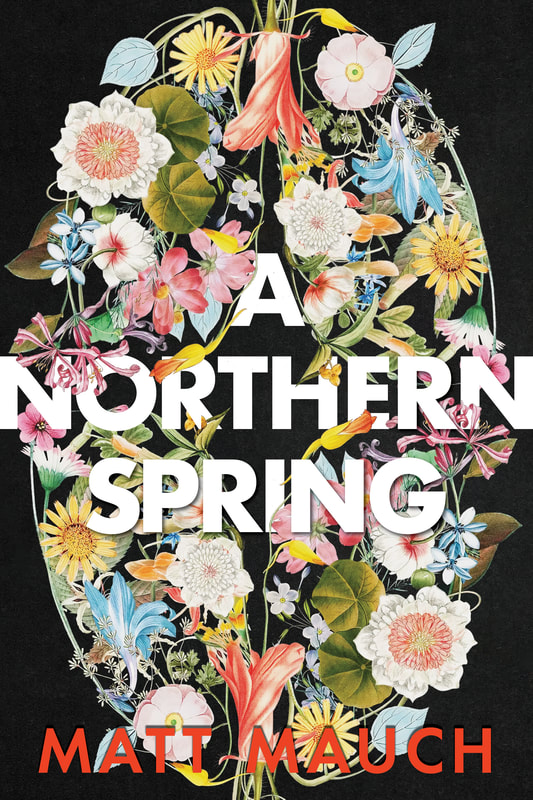
The cover of A Northern Spring does such an excellent job of interpreting the book visually. The first thing I see in this image is an egg, before I see that the egg is made of flora. An egg is potential. It can hatch life for individuals. It can sustain life for species. Louis Cyphre (look him up) says, "You know, some religions think that the egg is the symbol of the soul, did you know that?"

An egg is fragile approached with hardly any force at all from the sides, almost indestructible when approached with great and sustained force at each of its poles. This egg emerges from the darkest dark and its casing is not made of calcium carbonate crystals but of flowers that mimic lungs (perhaps hemispheres), the red-orange flowers like opening hearts in mirror image, north and south.

The potential and precariousness here are great in equal measure. It's hard to imagine a different cover being a better fit for the the book. All the credit goes to Joel W. Coggins, gracious and thoughtful human, cover designer extraordinaire.
0 Comments

SOld  out / AWP  Seattle

3/11/2023

0 Comments

 
Picture
Picture
Picture
On the last day of AWP, the public can pay a small fee to visit the book fair. This makes the conference a lot less insidery—a lot more like a enclosed mall of booksellers, bookmakers, book lovers, wordsmiths, a kind of carnival of entities dedicated to wordsmithery, to books. I can imagine more beautiful rows than the AWP rows. Rows covered by glass in an open-air market. Rows along some Seine. The AWP rows are not those, but the people who populate them are the same as would populate the more picturesque, iconic rows of memory, of the imagination. When the doors open to the public, it significantly increases the ratio of readers to writers in the aisles, and so changes the tenor of the conversations one has with strangers. It would be knee-jerk to say it improves them, and I almost said it did, before I thought further. With a hour or so to go before booth tear-down (AWP is prickly about tear-down not starting too early in the day) the press has sold out of all of the copies of A Northern Spring that it brought to Seattle. Dedicated sellers? A blip the result of a beautiful cover? Time will tell. It always does.

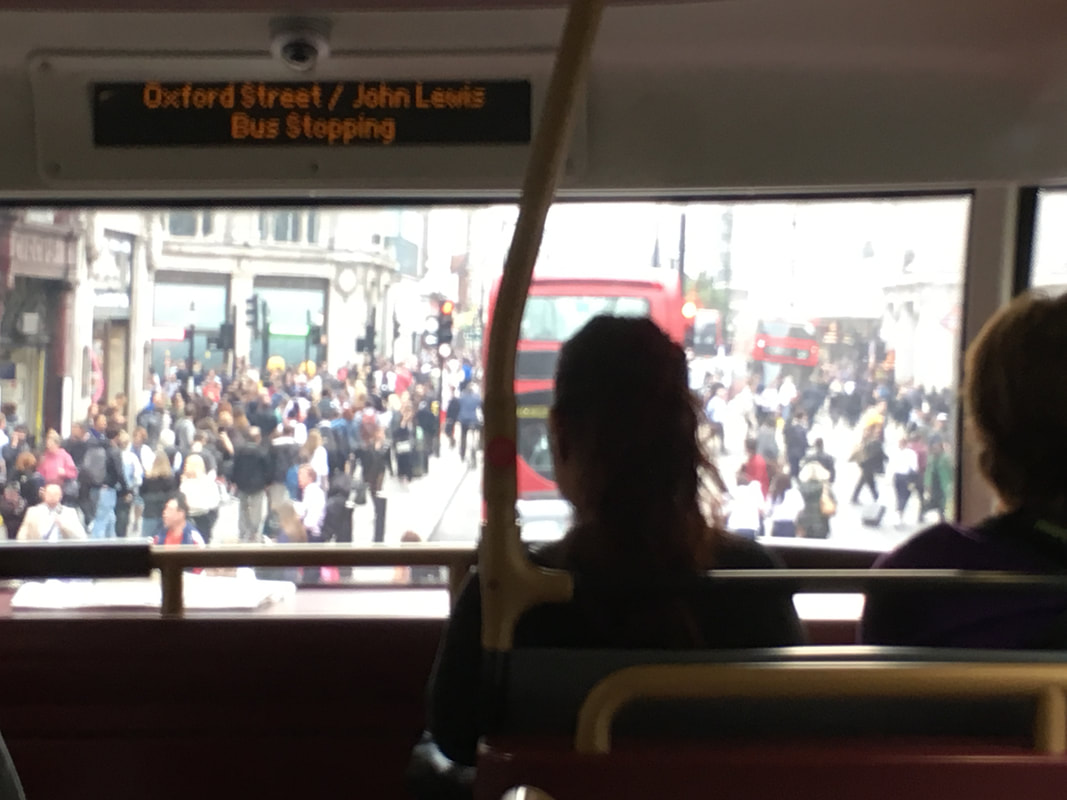
PHOTOS: Upper left: busy vendor booths along the Seine in Paris. Upper right: Bird's-eye view of vendor rows at AWP. Lower right: Busy, open-air market street in London, seen from the top deck of a double-decker bus, as near to the front as one could get without kicking the couple seen here from behind out of the best available seats. 
0 Comments

My  fellow  readers  knocked  it  out  of  the   park /  underbelly  /  seattle

3/10/2023

0 Comments

 
Picture
Picture
Picture
Picture
Picture
Picture
Picture
Great stage, lighting, sound, space, crowd, staff, and tap offerings at Underbelly. It was the kind of bar reading where one gets the sense that either readings have been held here before or else the crowd is a moveable feast that knows what to do when a writer steps up the mic.

My colleague and friend Lynette Reini-Grandell's new memoir, Wild Things, is out. Her spouse and co-star of the memoir, Venus De Mars, asked her to read something that would make her cry, and Lynette obliged. I have read before with and know David Groff and Lee Ann Roripaugh, and have read and am acquainted with Jan Beatty. Jen Manthey lives in the Twin Cities and so I know of her and travel in orbits with many who also travel in hers, but this is the first time I have met her. Laura Bandy and her book are both new to me.

The best laid plans gang aft agley, right? I'm not sure if those listened heard my reading as I did, but via my ears as the words came out of my mouth, I heard something altogether different from the perfect plan I'd hatched over pizza and beer. After I'd read some of the opening prose and talked a bit, contextualizing things,  I realized I'd used up a little more than half of my allotted time. I had to rush and cut on the fly. I read a couple of poems and skipped, didn't say what I'd hope top say about them, cut the additional contextualizing I'd plan to do, and got to the last prose section. I tried to skip anything skippable, editing out sentences/phrases/words as I was reading. What my ears heard bore little coherence to the scope and ends of my plan, and I'd gone a minute or two longer than I was supposed to. It felt like a complete and forgettable disaster. To top it off, I'd tried to play good citizen before it was my turn to read. Each of the readers' books had been stacked and spread along the right side of the stage, like a fanned out deck of oversized cards, which is the side people needed to step up on the dais from—it's where the step was located. The first couple readers had to step over the fanned out books and in doing so were balanced precariously on one leg before skip-hopping to the other. I didn't want anyone to fall, so in between two readers I stepped up and rearranged the books so that readers ascending the dais had a clear path. Backing into my seat stage right, I backed into the small, round two top atop which sat my beer, which tipped and spilled onto Jen and a bunch of stuff we had on the bench seat between us. This is also the story of why my reading copy of A Northern Spring is much more warped and timeworn than a brand book would otherwise be.

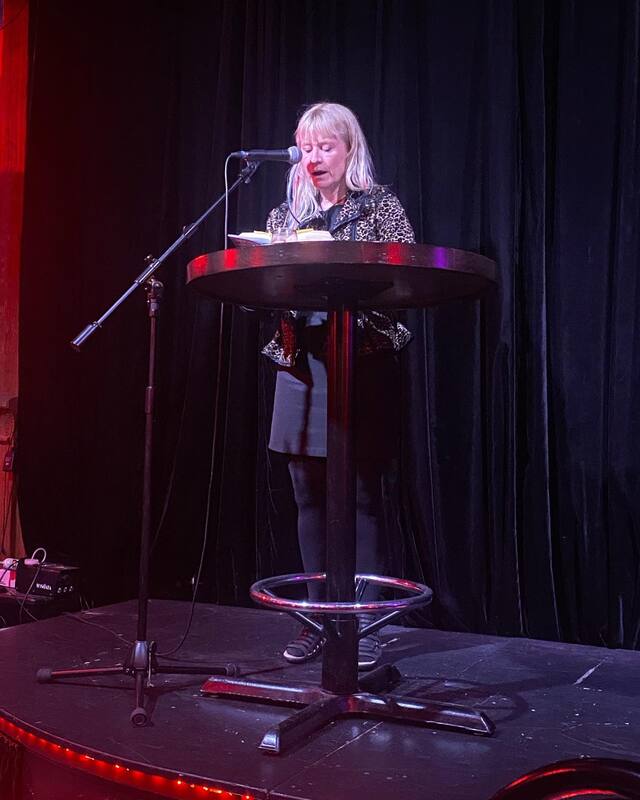
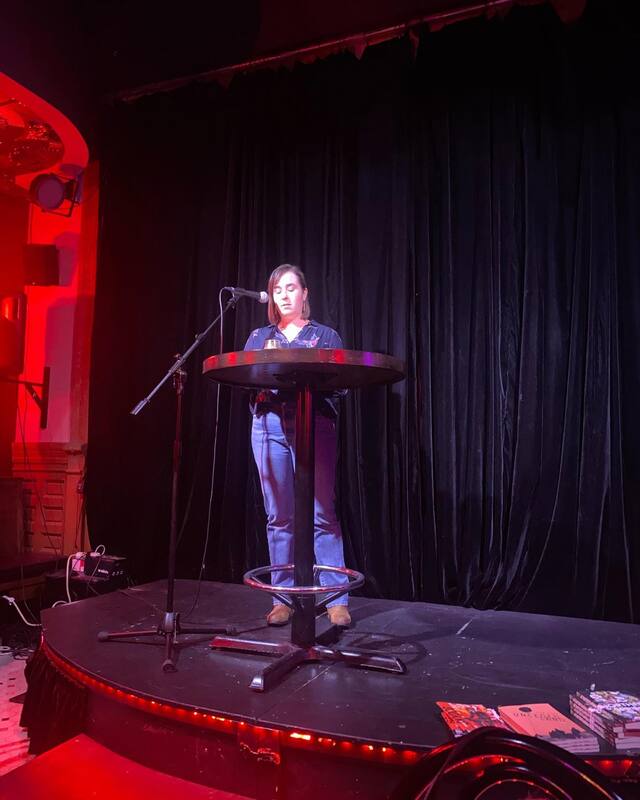
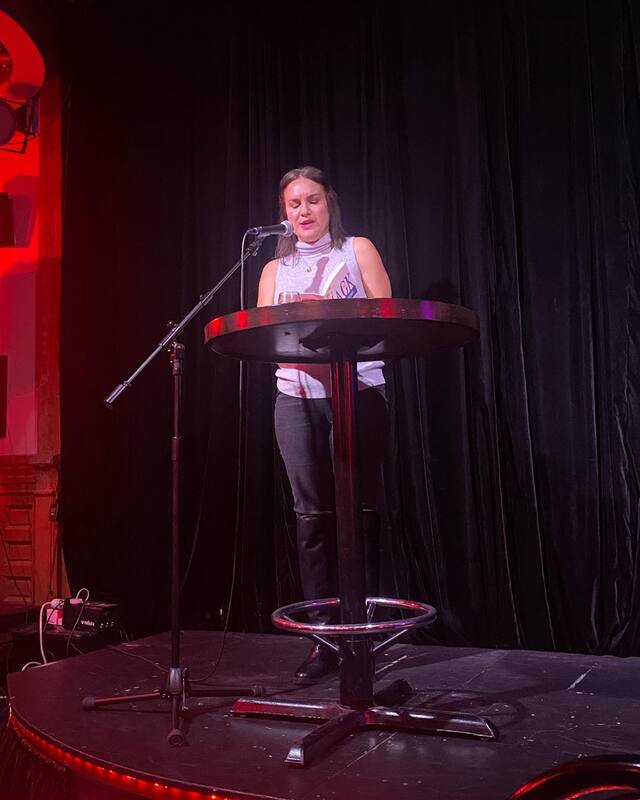
PHOTOS, CLOCKWISE FROM UPPER LEFT: Lynette Reini-Grandell, Issam Zineh (author of Unceded Land), David Groff (author of Live in Suspense, Clay, and more), Jan Beatty (author of American Bastard, The Body Wars, and more), Lee Ann Roripaugh (author of #stringofbeads, Dandarians, and more), Laura Bandy (author of Monster Movie), Jennifer Manthey (author of The Fight).

0 Comments

PLan   hashed   out   over   pizza   &   beer  /  Seattle

3/10/2023

0 Comments

 
Picture
Picture
Picture
Over really good happy-hour-priced wood-fired pizza and a local pilsner, I've decided to try to capture the arc of the A Northern Spring as well as I can by reading a bit from the beginning, a bit from the middle, and a bit from the end. I'll start with prose that sets the scene—us in Derry, in the North of Ireland, when the travel ban is announced. After that, I'll talk a bit from notes to contextualize the book as a whole, how the prose is set in four preludes plus a coda with the poems intervening, and maybe a bit about why it's structured that way. Then I'll read a couple of my shorter, most reading-friendly poems, will say a bit more from notes—how the book coming to be was a matter of a confluence of events I'll likely never experience again—putting the arc I'm trying to capture inside a frame, and then I'll close with some prose from the coda. Boom.

PHOTO, LEFT: The handbill for the AWP offsite reading that Trio House Press is co-sponsoring, along with the South Dakota Review, Gold Wake Press, and the Minnesota Historical Society Press. The readers representing the various presses are discernible by the color-coding, the press names being the same color as the stars in which the names of their readers appear. The reading theme—"WE'RE THE FLOWNOVER"—is a tongue-in-cheekish (or not so tongue-in-cheekish) reference to the denotation of "flyover":

flyover—as modifier—US informal, derogatory denoting central regions of the US regarded as less significant than the East or West coasts: his appeal extends way beyond the Bible Belt and the flyover states.

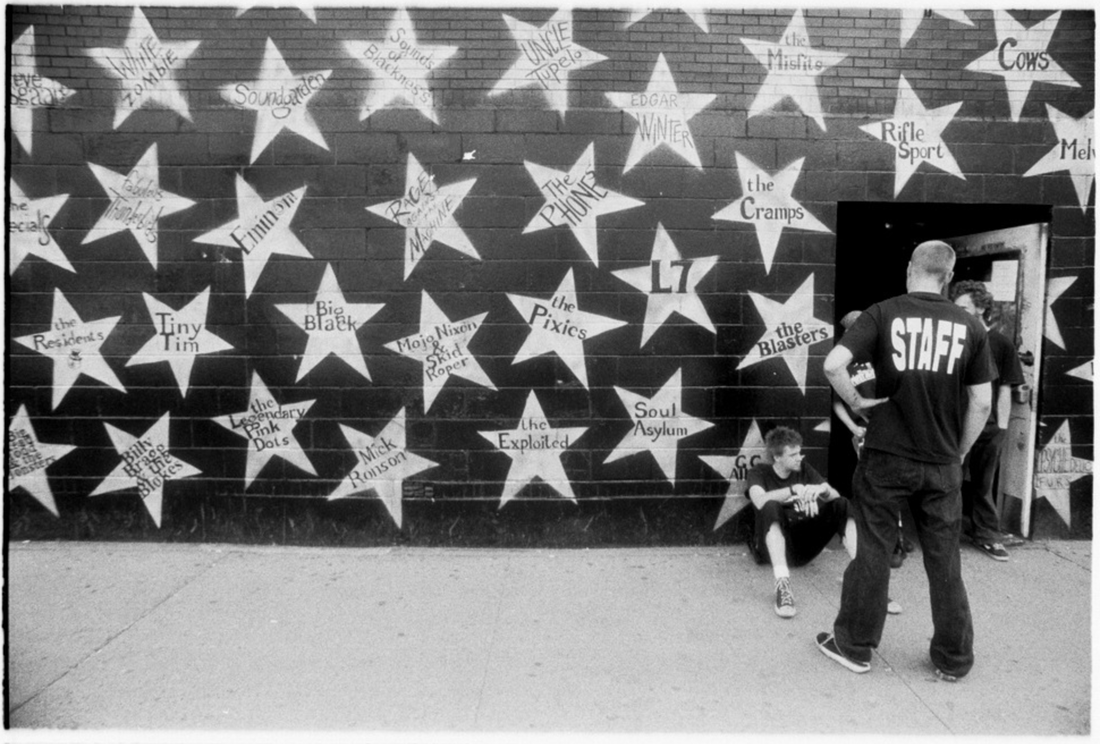
The stars are homage to the stars of First Avenue & 7th Street Entry, the two historic and iconic music venues (known by locals as "The Mainroom" and "The Entry") housed side by side in the same building with a passageway between them, in downtown Minneapolis, known to the world as as the club featured in the Prince film Purple Rain.

PHOTOS, RIGHT: Top, a close up of the some of the First Ave stars inside which are the names of bands/performers who have appeared at either The Mainroom or The Entry. Bottom, First Ave main entrance.

0 Comments
<<Previous
Forward>>

    Author

    Matt Mauch.

    Archives

    August 2023
    July 2023
    June 2023
    May 2023
    April 2023
    March 2023

    Categories

    All

    RSS Feed